Quick Answer
Conversational advertising in ChatGPT is about blending in, not standing out. Ads appear as helpful suggestions within the flow of conversation, triggered by context hints. The goal is to provide value at the exact moment the user is seeking a solution, making the ad feel like a natural part of the dialogue.
For decades, digital advertising has been about interruption. Pop-ups, banners, and pre-roll videos all share one trait: they stop the user from doing what they want to do. ChatGPT flips this model on its head.
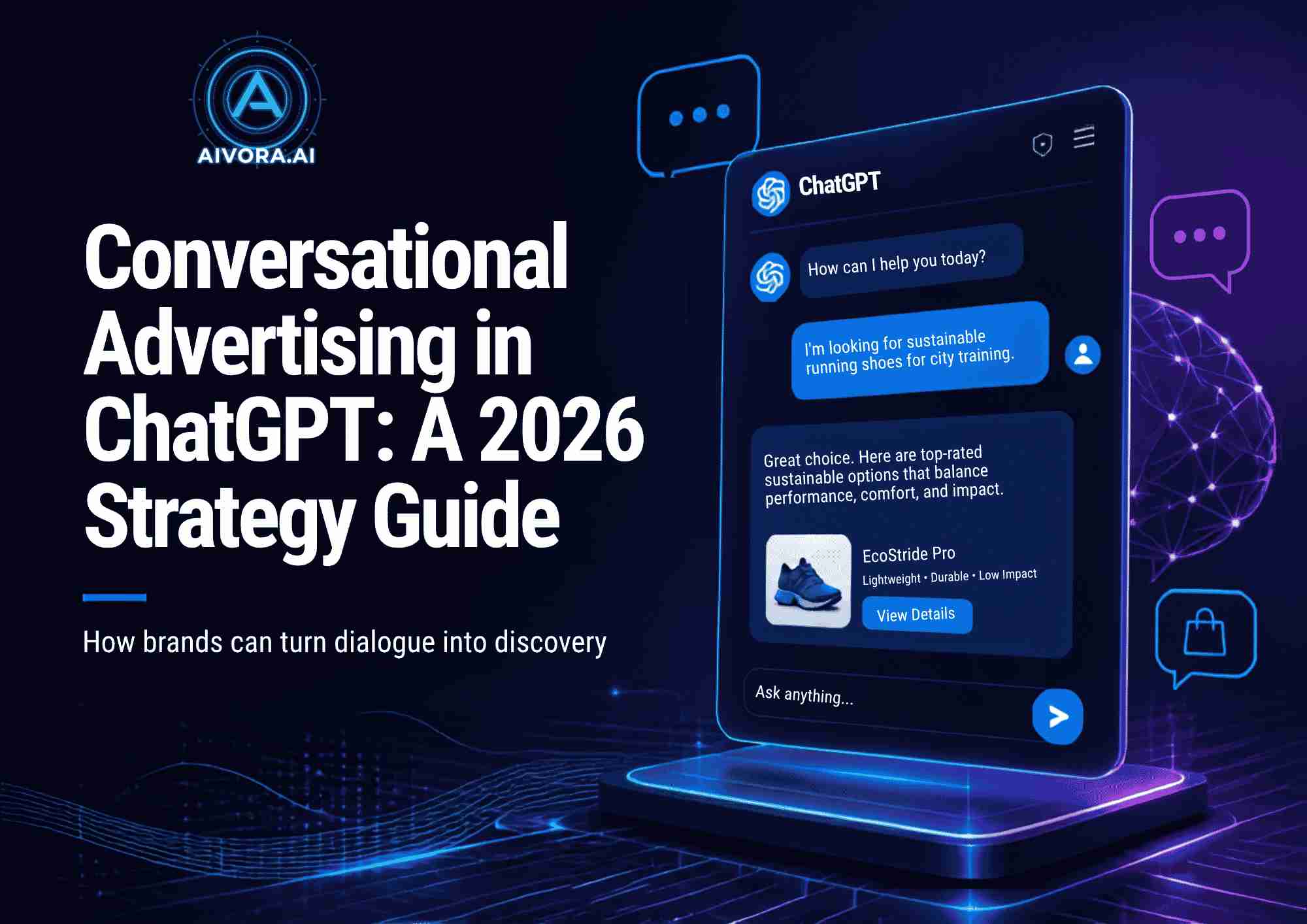
In conversational advertising, the ad is the answer. Or at least, a helpful step toward it. When a user asks ChatGPT for advice on "how to scale my email list," a well-placed conversational ad might suggest a specific tool that solves that exact problem, complete with a clear call to action.
This isn't just a new format; it's a new philosophy. Let's explore how to master it.
The 3 Principles of Conversational Ads
To succeed in ChatGPT, your ads must adhere to three core principles:
Relevance Over Reach
Don't try to show your ad to everyone. Show it to the few people who are actively asking for your solution.
Helpfulness Over Hype
Avoid marketing jargon. Use clear, direct language that explains how your product solves the user's current problem.
Seamlessness Over Disruption
The transition from ChatGPT's response to your ad should feel natural. Use consistent formatting and tone.
1. User Query
"How do I automate invoicing?"
2. AI Context Match
Detects intent: "Looking for tools"
3. Native Ad Suggestion
"Try Tool X for automated invoices"
The seamless flow of a conversational ad
Design Tips for Higher Conversion
Even in a text-based environment, design matters. Here’s how to make your conversational ads pop without being annoying:
- Use Clear Headlines: Your headline should be a benefit, not a feature. "Save 5 Hours a Week" beats "Automated Software."
- Include Social Proof: If possible, include a brief mention of trust. "Used by 10,000+ freelancers."
- Direct CTAs: Don't say "Learn More." Say "Start Free Trial" or "Get Template."
💡 Pro Tip: Test different tones. Sometimes a professional tone works best; other times, a casual, friendly suggestion performs better. Use A/B testing within your context hints to find the right voice.
Common Mistakes to Avoid
Many brands fail in ChatGPT because they treat it like a banner ad network. Here are the biggest pitfalls:
| Mistake | Why It Fails | Better Approach |
|---|---|---|
| Being Too Salesy | Breaks the conversational trust | Be helpful and advisory |
| Vague Context Hints | Shows ads to wrong users | Be specific about the problem |
| Ignoring Mobile | Most ChatGPT usage is mobile | Keep copy short and scannable |
| No Clear Value Prop | User doesn't know why to click | State the benefit immediately |
The Future of Conversational Marketing
As AI models become more sophisticated, conversational advertising will evolve from simple suggestions to full interactive experiences. Imagine clicking an ad and continuing the conversation with a specialized AI agent from the brand. This is already happening in early tests.
To stay ahead, start building your brand's voice now. How would your brand answer a customer's question in a helpful, non-salesy way? That voice is your greatest asset in 2026.
💬 Ready to Try Conversational Ads?
Start with one context hint and one clear, helpful ad copy. Monitor your results and refine your approach. For more tools to help you manage your AI marketing stack, visit our products page.
🔍 Explore AI Marketing Tools →Frequently Asked Questions
Conversational advertising is a format where ads appear as natural suggestions within a ChatGPT conversation, rather than as disruptive banners. They are triggered by context hints and designed to be helpful and relevant to the user's current query.
Traditional display ads interrupt the user experience. Conversational ads are integrated into the flow of information, appearing only when the AI detects a relevant opportunity to help the user solve a problem.
Related Guides
Need Help With Ad Copy?
If you’re struggling to write conversational ad copy that doesn't sound like a robot, reach out. We can help you refine your brand voice for AI interfaces.
Written by Varun Lalwani
Varun is the founder of Aivora AI and an AI tools reviewer with 6+ years of experience. He tracks new AI tool launches and tests them against real workflows before recommending them. Read more about Varun