Quick Answer
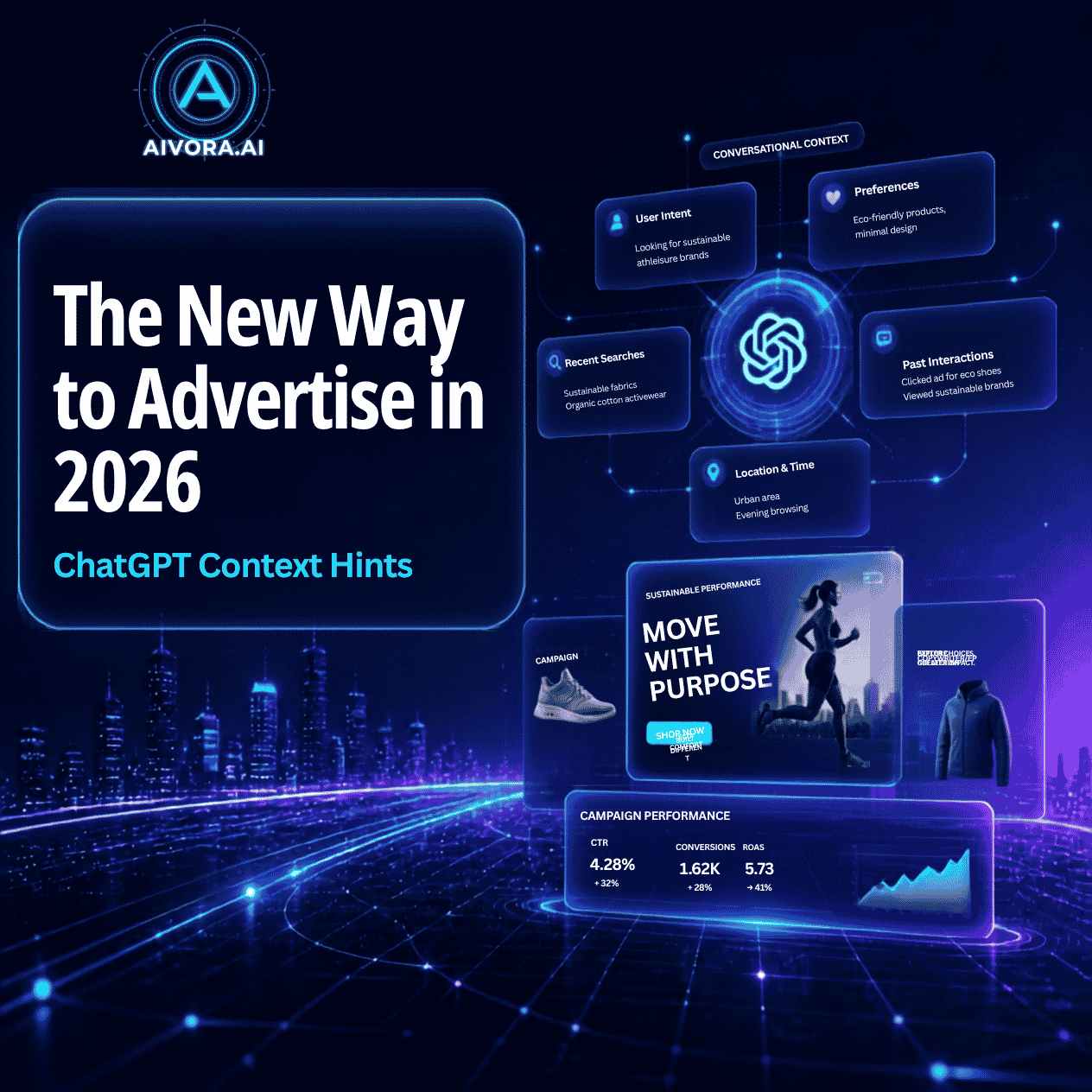
ChatGPT ads do not use traditional keyword lists. Instead, advertisers use context hints—short descriptions of user intents, problems, or conversation topics. This allows OpenAI’s AI to match your ad to users who are actively discussing relevant issues, resulting in higher conversion rates than broad keyword matching.
If you’re used to Google Ads, you’re probably looking for a keyword planner. Stop. In ChatGPT, keywords don’t exist in the way you think they do. You can’t bid on "best CRM software" and expect to show up every time those words are typed.
Instead, OpenAI has introduced a new model called contextual targeting. You provide "context hints" that describe the scenario where your ad should appear. This is a massive shift from matching words to matching intent.
In this guide, we’ll break down exactly what context hints are, how they differ from keywords, and give you a template for writing your first high-performing ChatGPT ad campaign.
What Are ChatGPT Context Hints?
A context hint is a natural language description of a user’s state of mind or problem. Think of it as telling the AI: "Show my ad when someone is asking about X because they are trying to solve Y."
For example, instead of bidding on the keyword "email marketing tool," your context hint might be:
💡 Example Context Hint
"User is comparing email marketing platforms for a small business and is concerned about pricing and ease of use."
High IntentThe AI then scans conversations for semantic matches to this scenario, not just specific words. This means your ad could appear even if the user never types the word "platform" or "business," as long as the context matches.
❌ Old Way: Keywords
Matches exact words
"Best CRM"
✅ New Way: Context Hints
Matches intent & scenario
"Looking for sales tools"
The shift from literal matching to semantic understanding
Why Context Hints Outperform Keywords
Traditional keyword advertising suffers from "keyword stuffing" and ambiguous intent. When someone searches "Apple," are they looking for fruit or iPhones? In ChatGPT, the conversation provides the answer.
Context hints leverage this rich conversational data. Here’s why they work better:
- Higher Intent: Users in ChatGPT are often deep in research or problem-solving mode.
- Less Waste: You aren’t paying for accidental clicks from people who just typed a word.
- Natural Fit: Ads feel like helpful suggestions rather than interruptions.
How to Write Effective Context Hints
Writing a good context hint is more like writing a user persona than a keyword list. Follow these three rules:
Describe the Problem
Focus on what the user is trying to fix. E.g., "Struggling to organize team schedules."
Mention the Goal
What is their desired outcome? E.g., "Wants to automate meeting notes."
Specify the Audience
Who are they? E.g., "Small business owner," "Freelance developer."
Keep it Natural
Write it as a sentence, not a list of tags. The AI understands natural language best.
⭐ Pro Tip: Use negative context hints if available. Tell the AI when not to show your ad (e.g., "Not for enterprise-level queries").
Context Hints vs. Traditional Keywords
| Feature | Traditional Keywords | ChatGPT Context Hints |
|---|---|---|
| Matching Logic | Exact or Broad Match | Semantic Intent Matching |
| User State | Searching | Conversing & Solving |
| Setup | Keyword Lists | Natural Language Descriptions |
| Relevance | Medium | High |
| Competition | High (Bidding Wars) | Lower (Niche Contexts) |
Integrating Context Hints into Your Strategy
If you’re already running ads on other platforms, don’t just copy-paste your keywords. You need to rethink your approach. Start by looking at your best-performing customer support tickets or sales calls. What questions are people asking right before they buy?
Those questions are your context hints. For more on building an AI-driven income strategy, check out our guide to the best passive income ideas using AI in 2026.
🚀 Ready to Launch Your First ChatGPT Ad?
Don’t guess. Test 3-5 different context hints and see which ones drive the most qualified traffic. Our AI Tools page has resources to help you track and optimize your campaigns.
🔍 Explore AI Marketing Tools →Frequently Asked Questions
Context hints are short descriptions of conversations, topics, or user intents that tell OpenAI's ad system when to show your ad. Unlike traditional keywords, they describe the scenario rather than matching specific words.
No. ChatGPT ads do not use keyword bidding. Instead, you provide context hints and set a budget. The AI matches your ad to conversations based on semantic understanding of the user's intent.
Start with 3-5 highly specific context hints that describe your ideal customer's problem. Quality matters more than quantity. Too many vague hints can dilute your ad relevance.
Related Guides
Need Help With Context Hints?
If you’re struggling to write effective context hints for your niche, reach out. We can help you refine your messaging for conversational AI.
Written by Varun Lalwani
Varun is the founder of Aivora AI and an AI tools reviewer with 6+ years of experience. He tracks new AI tool launches and tests them against real workflows before recommending them. Read more about Varun