Quick Answer
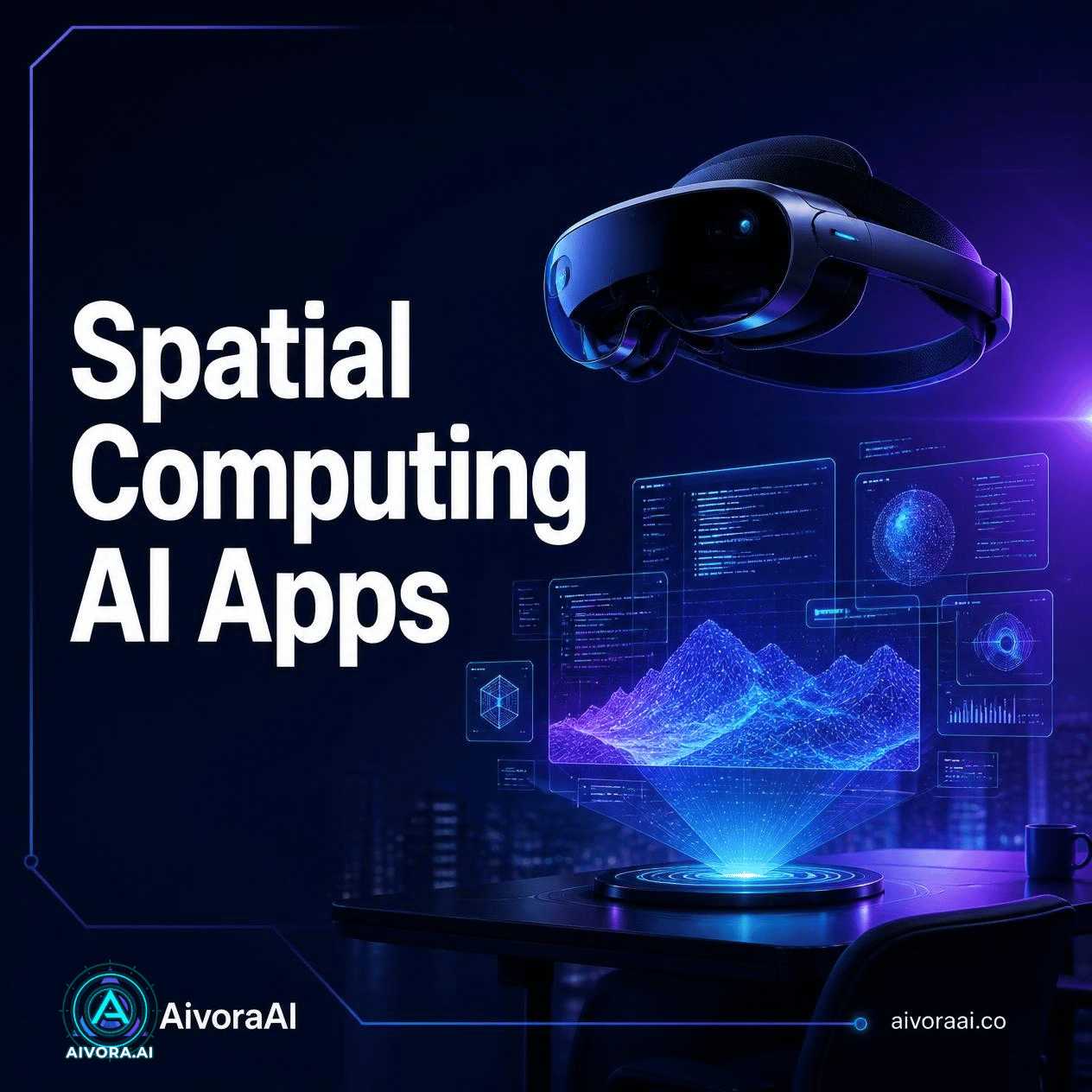
Spatial computing AI apps are applications that use Artificial Intelligence to understand and interact with the 3D physical world. By combining AR, VR, and MR with machine learning, these apps can recognize objects, map rooms, and enable natural gestures, creating a seamless blend of digital and physical reality.
For decades, we've interacted with computers through flat screens. We tap, click, and scroll in two dimensions. But the world isn't flat—it's spatial. And in 2026, our technology is finally catching up.
Spatial computing is the shift from looking at technology to living inside it. But hardware alone isn't enough. To make sense of the complex 3D world around us, we need AI. From recognizing the shape of your coffee table to understanding your hand gestures, AI is the brain behind the spatial revolution.
This guide explores the most exciting spatial computing AI apps available today, how they work, and why they represent the biggest opportunity for developers and businesses since the smartphone.
What Is Spatial Computing?
Spatial computing is an umbrella term for technologies that allow humans to interact with digital content in a 3D space. It includes:
- Augmented Reality (AR): Overlaying digital info on the real world (e.g., Pokémon GO).
- Virtual Reality (VR): Fully immersive digital environments (e.g., Meta Quest).
- Mixed Reality (MR): Digital objects that interact physically with the real world (e.g., Apple Vision Pro).
While these technologies have existed for years, they were often clunky and required manual setup. AI changes everything by automating the understanding of space.
1. Sensors
Cameras, LiDAR, IMUs
2. AI Processing
Object Recognition & Mapping
3. Spatial Anchor
Placing Digital Content
4. Interaction
Gestures, Voice, Eye Tracking
How spatial computing AI apps process the world
Top Spatial Computing AI Apps in 2026
The ecosystem is growing rapidly. Here are the categories and apps leading the charge:
1. Immersive Workspaces
Apps like Immersion allow you to place unlimited virtual monitors in your physical room. AI helps anchor them to your desk so they don't drift, and recognizes your keyboard for tactile feedback.
2. 3D Modeling & Architecture
Tools like Shapr3D use AI to convert hand-drawn sketches into 3D models instantly. Architects can walk clients through a building before it's even built, with AI adjusting lighting and materials in real-time.
3. Interactive Learning
Medical students use AI-driven spatial apps to practice surgery on virtual patients that react realistically. History students can walk through ancient Rome, with AI guides answering questions about every ruin.
4. Virtual Try-Ons
Beyond just glasses, apps now let you place furniture, appliances, and even cars in your home with perfect scale. AI analyzes your room's lighting to make the digital object look photorealistic.
The Critical Role of AI in Spatial Computing
Without AI, spatial computing would be blind. Here’s what AI actually does inside these apps:
- Simultaneous Localization and Mapping (SLAM): AI builds a map of your room in real-time as you move, identifying floors, walls, and obstacles.
- Object Recognition: The AI knows that the flat surface in front of you is a table, not the floor, so it places your virtual coffee cup correctly.
- Natural Language Processing (NLP): You can talk to your spatial environment. "Move that window to the left," and the AI understands the command and the object.
- Generative 3D: Instead of downloading massive 3D files, AI can generate textures and models on the fly based on simple text prompts.
⭐ Pro Tip: If you're developing for spatial computing, focus on "intent recognition." Users don't want to press buttons; they want the AI to understand what they're trying to do with their eyes and hands.
Integrating Spatial AI with Your Business
You don't need to build a VR game to benefit from this. Spatial computing is transforming traditional industries:
1. Remote Assistance
Field technicians can wear AR glasses while an expert miles away sees exactly what they see. AI can highlight wires or parts that need attention, reducing errors and training time. This is similar to how AI video translation breaks language barriers, but for visual instructions.
2. Global Ecommerce
Imagine a customer in Japan viewing your US-based store. With spatial computing, they can see your product in their home. Combine this with AI ecommerce translation to localize the entire shopping experience, and you have a powerful global sales engine.
3. Real Estate & Interior Design
Agents can offer virtual tours where potential buyers can change wall colors or furniture styles instantly using AI. This level of interactivity increases engagement and speeds up decision-making.
Challenges to Adoption
Despite the hype, there are hurdles:
- Hardware Cost: High-end headsets are still expensive for the average consumer.
- Battery Life: Processing 3D space and AI models drains batteries quickly.
- Privacy: Cameras that map your home raise significant privacy concerns. Developers must be transparent about data usage.
🚀 Ready to Enter the Spatial Web?
The future is 3D. Explore our curated list of AI tools that can help you build, visualize, and optimize for spatial computing.
🔍 Explore Spatial AI Tools →✓ AR/VR Dev Kits · ✓ 3D AI Generators · ✓ Spatial Analytics
The Future: The End of Screens?
We aren't saying screens will disappear tomorrow. But for many tasks, spatial interfaces are simply better. Why look at a small map on your phone when you can see arrows projected on the road in front of you? Why read a manual when you can see the repair steps floating over the engine?
As AI gets smarter and hardware gets lighter, spatial computing will become invisible. It won't be something you "put on"; it will be how you see the world.
Frequently Asked Questions
Spatial computing AI apps are applications that blend digital content with the physical world using Augmented Reality (AR), Virtual Reality (VR), or Mixed Reality (MR). They use AI to understand the environment, recognize objects, and enable natural interactions like eye-tracking and hand gestures.
AI powers the core features of spatial computing, including real-time object recognition, depth mapping, natural language processing for voice commands, and generative AI for creating 3D assets on the fly.
Related Guides
Need Help With Spatial AI?
If you’re unsure which spatial computing tool fits your business, ask us. We test them all so you don’t have to.
Written by Varun Lalwani
Varun is the founder of Aivora AI and an AI tools reviewer with 6+ years of experience. He tracks new AI tool launches and tests them against real workflows before recommending them. Read more about Varun