Quick Answer
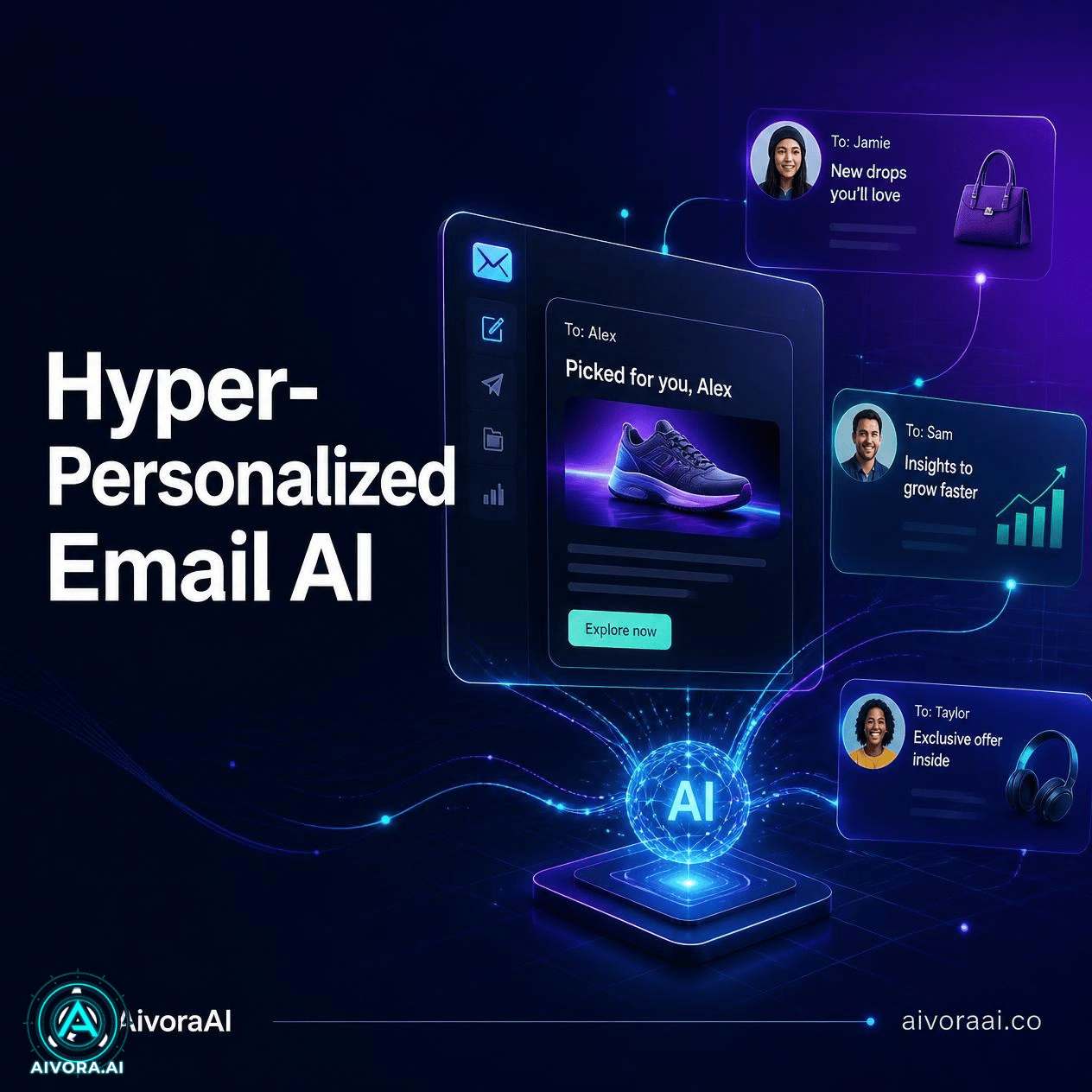
Hyper-personalized email AI goes beyond inserting a first name. It uses machine learning to analyze individual user behavior, preferences, and purchase history to generate unique email content for each recipient. This ensures that every subscriber receives a message that feels hand-written and specifically relevant to their current needs.
Email marketing isn't dead, but generic email marketing is. In 2026, consumers are inundated with thousands of messages a week. If your email looks like it was sent to a million other people, it gets deleted. If it looks like it was written just for them, it gets read.
This is where hyper-personalized email AI comes in. Instead of creating five segments and writing five emails, you create one strategy and let AI write a thousand unique variations. It’s the difference between shouting into a crowd and having a private conversation.
In this guide, we’ll explore how this technology works, the best tools to use, and how you can implement it to transform your marketing ROI. We’ll also look at how it integrates with broader strategies like AI ecommerce translation for global campaigns.
What Is Hyper-Personalized Email AI?
Traditional personalization is static. You might insert a `{First Name}` or recommend products based on a broad category like "Men's Shoes." Hyper-personalization is dynamic and contextual.
AI analyzes dozens of data points in real-time:
- Browsing History: What specific items did they look at but not buy?
- Purchase Behavior: Do they only buy on weekends? Do they prefer discounts or new arrivals?
- Engagement Patterns: Do they open emails on mobile or desktop? Morning or night?
- External Context: Is it raining in their city? (Great for selling umbrellas or cozy indoorsy products).
The AI then generates a unique subject line, body copy, and product recommendation for that specific person at that specific moment.
1. Data Ingestion
CRM, Web, & Social Data
2. AI Analysis
Pattern & Intent Recognition
3. Content Generation
Unique Copy & Images
4. Delivery
Optimized Send Time
How hyper-personalized email AI works
Why Hyper-Personalization Wins
The stats don't lie. Hyper-personalized campaigns consistently outperform generic ones by wide margins:
Higher Visibility
Subject lines that reference recent behavior or local context see up to 50% higher open rates because they spark immediate curiosity.
Better Relevance
When the content matches the user's current intent, click-through rates can double. You're solving a problem they already have.
Increased Sales
Personalized product recommendations drive significantly higher average order values (AOV) because they feel like helpful suggestions rather than ads.
Stronger Loyalty
Customers feel understood and valued when brands remember their preferences, leading to lower churn and higher lifetime value.
Top Hyper-Personalization Tools in 2026
You don't need a team of data scientists to do this anymore. Several platforms have made it accessible:
| Tool | Best For | Key Feature |
|---|---|---|
| Brevo (Sendinblue) | SMBs & Ecommerce | AI-driven send time optimization |
| HubSpot AI | B2B & Enterprise | Deep CRM integration for context |
| Klaviyo | Ecommerce Brands | Predictive analytics for LTV |
| Phrasee | Subject Line Optimization | Generative language models |
Integrating AI Email with Your Global Strategy
If you’re selling globally, hyper-personalization must include language and cultural context. Sending a perfectly personalized email in English to a customer in Japan won’t work if they prefer Japanese.
This is where combining hyper-personalization with AI translation tools becomes powerful. You can personalize the offer based on behavior, and localize the language based on location. This dual approach ensures maximum relevance.
For content-heavy newsletters, you can also use AI to summarize long-form articles into personalized digests. For more on creating that long-form content, check out our guide on writing long-form AI blog posts.
Best Practices for Implementation
Jumping into hyper-personalization can be overwhelming. Here’s how to start safely:
- Clean Your Data: AI is only as good as the data it feeds on. Ensure your CRM and tracking pixels are working correctly.
- Start Small: Don’t try to personalize everything at once. Start with subject lines or product recommendations.
- Respect Privacy: Be transparent about data usage. Give users control over their preferences. Creepy personalization backfires.
- A/B Test Relentlessly: Even AI needs guidance. Test different tones and styles to see what resonates with your specific audience.
⭐ Pro Tip: Use AI to personalize the send time as well as the content. Sending an email when a user is most likely to check their inbox can boost open rates by 20% or more.
The Future: Predictive Personalization
We’re moving from reactive to predictive personalization. Soon, AI won’t just react to what you’ve done; it will predict what you will do. It might send you a discount for running shoes before you even realize your old ones are worn out, based on your mileage data from a connected app.
This level of anticipation will define the next era of customer experience. Brands that master it will build unbreakable loyalty.
🚀 Ready to Personalize at Scale?
Stop guessing what your customers want. Explore our curated list of AI tools that can help you understand and engage them like never before.
🔍 Explore AI Email Tools →✓ Easy Integration · ✓ High ROI · ✓ Privacy-First
Frequently Asked Questions
Hyper-personalized email AI uses machine learning to analyze individual user data (such as browsing history, past purchases, and engagement) to generate unique email content for each recipient. Unlike traditional segmentation, it creates one-to-one communication at scale.
Yes, significantly. Emails that address specific user interests or behaviors typically see open rate increases of 20-50% compared to generic broadcast emails, as they feel more relevant and less like spam.
Related Guides
Need Help With Email AI?
If you’re unsure which personalization tool fits your business, ask us. We test them all so you don’t have to.
Written by Varun Lalwani
Varun is the founder of Aivora AI and an AI tools reviewer with 6+ years of experience. He tracks new AI tool launches and tests them against real workflows before recommending them. Read more about Varun