Quick Answer
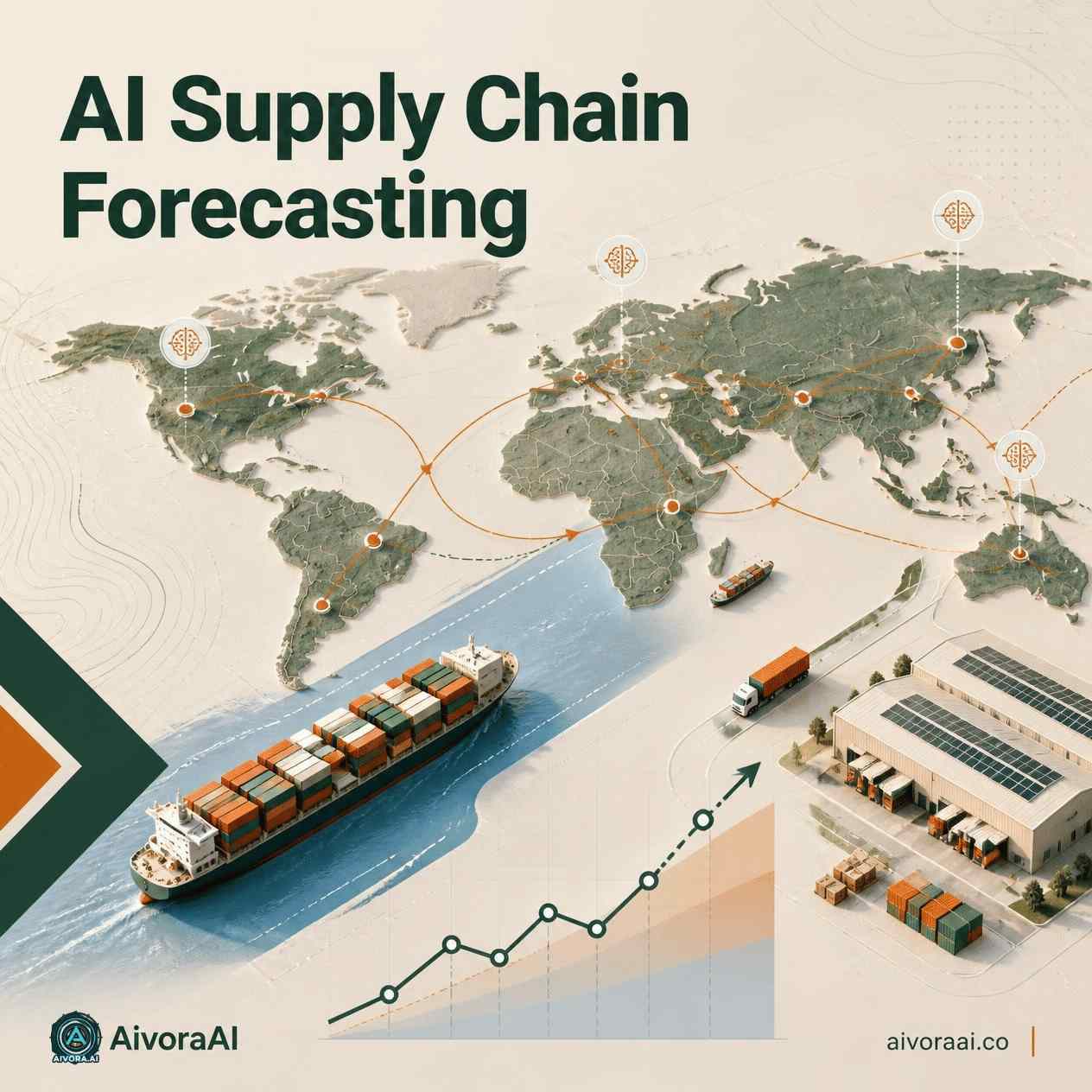
AI-driven supply chain forecasting uses machine learning to analyze vast amounts of data—including historical sales, weather patterns, economic indicators, and social media trends—to predict future product demand. This allows businesses to optimize inventory levels, reduce storage costs, and ensure they never miss a sale due to stockouts.
Supply chain management has always been a balancing act. Order too much, and you’re stuck with expensive inventory gathering dust. Order too little, and you lose customers to competitors who have what they need. For decades, businesses relied on simple spreadsheets and gut feeling to make these critical decisions.
In 2026, that era is over. AI-driven supply chain forecasting has transformed logistics from a reactive cost center into a proactive strategic advantage. By analyzing millions of data points in real-time, AI can predict demand spikes before they happen, allowing you to adjust your supply chain with precision.
This guide explores how this technology works, the best tools available, and how you can integrate it into your business to boost efficiency and profitability. We’ll also look at how it connects with broader strategies like AI ecommerce localization for global markets.
How AI Supply Chain Forecasting Works
Traditional forecasting looks at last year’s sales and adds a percentage for growth. AI forecasting is far more sophisticated. It uses "Multi-Variate Analysis" to consider dozens of external factors simultaneously.
Here’s what AI analyzes:
- Historical Data: Sales trends, seasonality, and promotional impacts.
- External Factors: Weather forecasts, local events, and economic indicators.
- Social Sentiment: Trends on TikTok or Instagram that might drive sudden demand.
- Supplier Data: Lead times, production capacity, and potential disruptions.
The AI then builds a predictive model that updates continuously as new data comes in, providing a dynamic and accurate view of future demand.
1. Data Ingestion
Sales, Weather, Social
2. Pattern Recognition
AI Identifies Trends
3. Prediction
Demand Forecasting
4. Action
Auto-Reorder & Alert
The AI supply chain forecasting lifecycle
Why Use AI for Supply Chain?
The benefits go beyond just "knowing what to order." Here’s why smart businesses are adopting this technology:
Reduced Holding Costs
By keeping inventory lean, you free up cash flow and reduce warehouse storage fees. AI ensures you only hold what you’re likely to sell.
Prevented Stockouts
Running out of stock is a missed opportunity. AI predicts spikes so you can stock up in advance, ensuring you never turn a customer away.
Automated Reordering
AI can automatically generate purchase orders when stock hits a predicted low point, saving hours of manual administrative work.
Risk Mitigation
AI can flag potential supply chain disruptions (like port delays or weather events) early, allowing you to find alternative suppliers before it’s too late.
Top AI Supply Chain Tools in 2026
We’ve tested the leading platforms. Here are the ones delivering the most accurate predictions:
| Tool | Best For | Key Feature |
|---|---|---|
| Blue Yonder | Enterprise Logistics | End-to-end supply chain visibility |
| Lokad | Ecommerce Brands | Probabilistic demand forecasting |
| ToolsGroup | Distribution | Service-level optimization |
| Inventory Planner | Small Business | Easy integration with Shopify/Amazon |
Integrating AI Forecasting with Global Strategy
If you’re selling globally, supply chain forecasting becomes even more critical. Different regions have different seasons, holidays, and trends. An AI tool can help you manage this complexity by creating region-specific forecasts.
For example, while it’s summer in the US, it’s winter in Australia. AI can help you balance your global inventory, moving stock to where it’s needed most. This pairs perfectly with AI translation tools that help you localize your storefront for those same regions.
Challenges and Best Practices
While powerful, AI forecasting isn't magic. Here are some pitfalls to avoid:
- Data Quality: AI is only as good as the data it feeds on. Ensure your sales history and inventory records are clean and accurate.
- Black Swan Events: AI struggles with unprecedented events (like a global pandemic). Always keep a "safety stock" buffer for unexpected shocks.
- Human Oversight: Don’t let AI run completely on autopilot. Have a human review major purchasing decisions, especially for new products with no history.
⭐ Pro Tip: Start with your top 20% of SKUs (which usually make up 80% of your revenue). Implement AI forecasting for these first to see the biggest immediate impact on your bottom line.
The Future: Autonomous Supply Chains
We’re moving toward a future where supply chains are fully autonomous. Imagine a system that not only predicts demand but also automatically negotiates with suppliers, books shipping containers, and adjusts pricing in real-time based on inventory levels.
By adopting AI forecasting now, you’re building the data foundation for this autonomous future.
🚀 Ready to Optimize Your Inventory?
Stop guessing and start knowing. Explore our curated list of AI tools that can help you forecast demand and streamline your supply chain.
🔍 Explore Supply Chain AI →✓ Easy Integration · ✓ High Accuracy · ✓ Cost Saving
Frequently Asked Questions
AI-driven supply chain forecasting uses machine learning algorithms to analyze historical sales data, market trends, weather patterns, and social media sentiment to predict future product demand with high accuracy.
AI improves inventory management by automating reorder points, predicting seasonal spikes, and identifying slow-moving stock. This reduces holding costs and prevents both overstocking and stockouts.
Related Guides
Need Help With Supply Chain AI?
If you’re unsure which forecasting tool fits your business, ask us. We test them all so you don’t have to.
Written by Varun Lalwani
Varun is the founder of Aivora AI and an AI tools reviewer with 6+ years of experience. He tracks new AI tool launches and tests them against real workflows before recommending them. Read more about Varun